Start with the intended layer
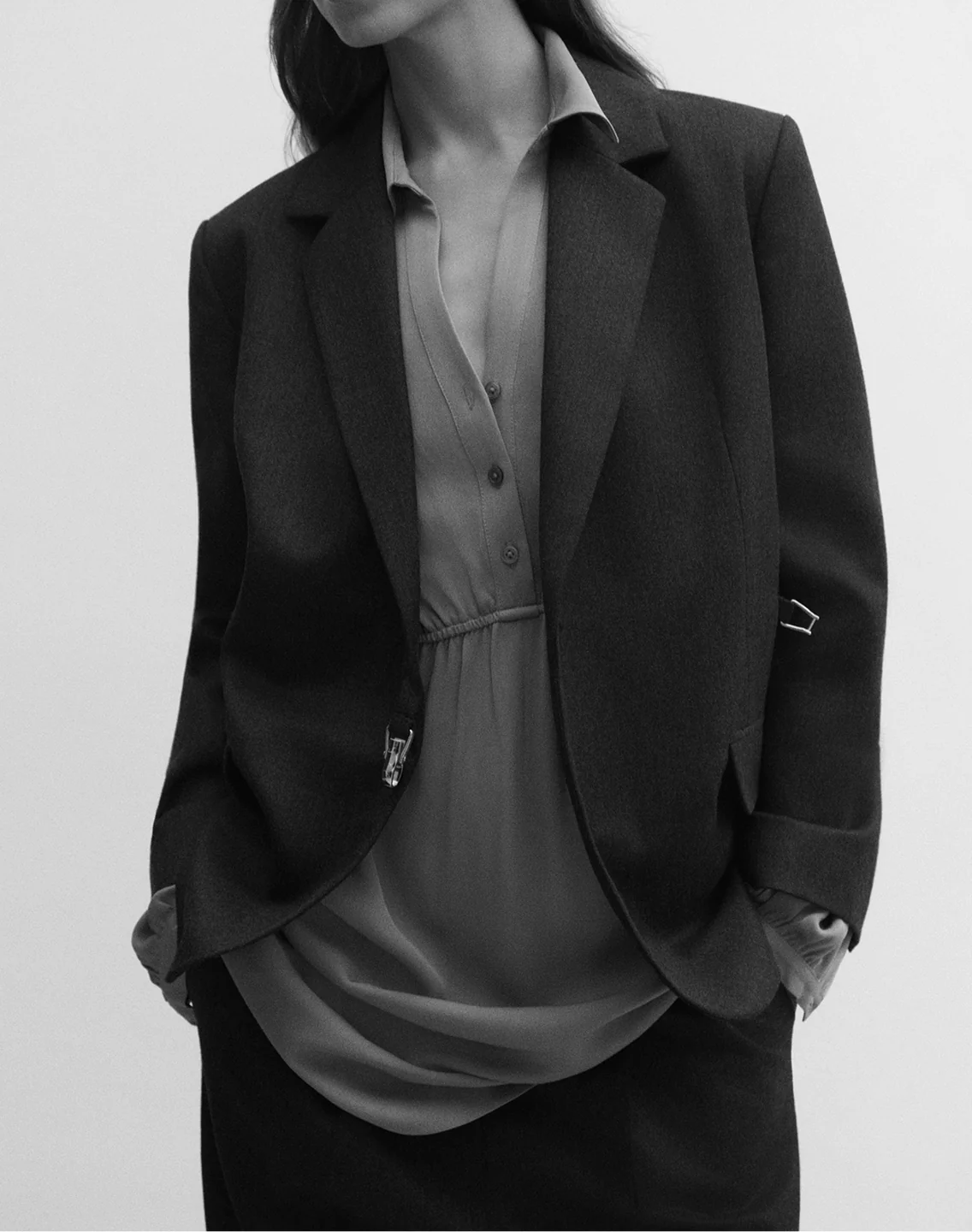
Try the blazer over a shirt or knit of the thickness you plan to wear. Empty the pockets and let the jacket settle before judging its outline. A fit that works over a thin top may feel different over a cardigan, so test the combination instead of the jacket alone.
Read the shoulder shape
Look at the shoulder from the front and side, then lift and lower your arms. Padding and extended seams can be intentional design choices. What matters is whether the jacket sits as you prefer without uncomfortable pressure, a collapsing sleeve or fabric that limits ordinary movement.
Use the closure as a check
Fasten the intended button while standing, then sit down and breathe normally. Notice pulling at the front and how the lapels rest. An open-worn jacket still needs comfortable room across the back; do not rely on leaving it undone to solve a restriction at the armholes.
Try the sleeve in action
Bend your elbow, reach toward a desk and put your hands in your usual position. Check whether the sleeve twists or catches on a watch. Choose a cuff length that suits the shirts you wear, and ask about alteration limits when working buttons or a shaped cuff complicate shortening.
Balance the lower half
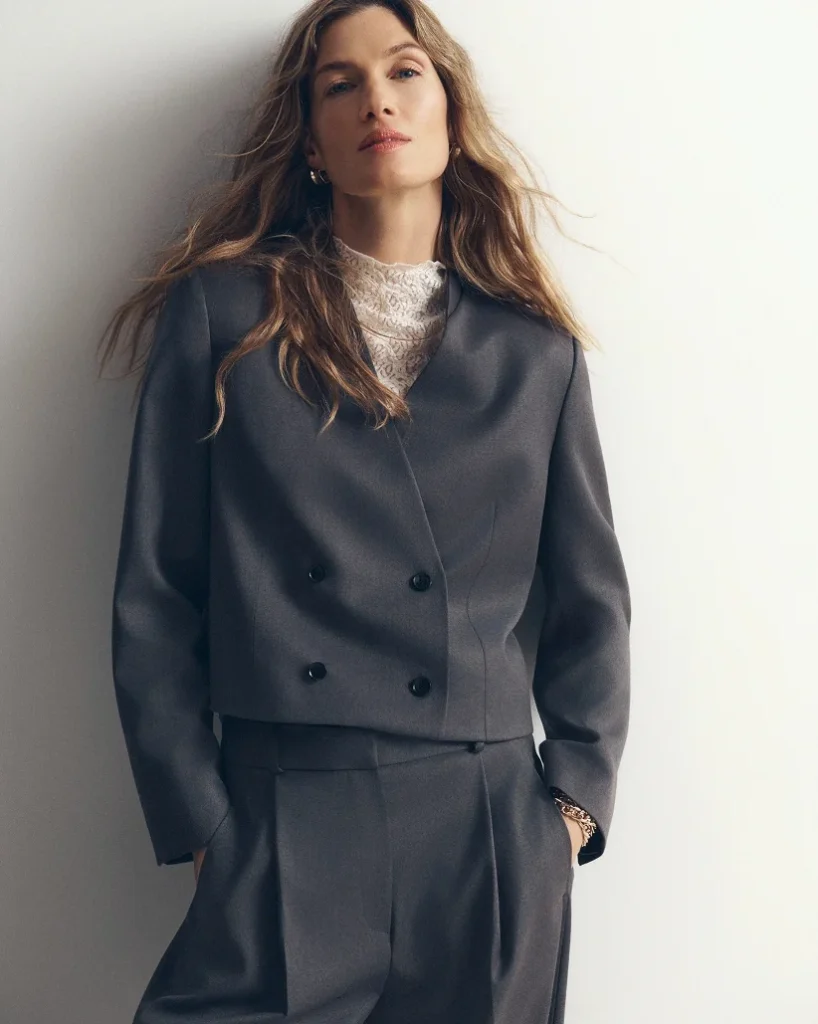
Try the jacket with both the trousers and skirts you plan to use. Compare where its hem meets the waistband and the widest part of the outfit. A longer jacket can change the balance of a wide trouser; a photo at ordinary eye level helps you compare without imposing one ideal shape.
Store its shape with care
Follow the care label and hang the jacket on a hanger that supports its shoulders without stretching them. Let it air where suitable and empty the pockets after wearing. Use a method approved for the fabric to remove creases; a sharp press can alter a softly constructed lapel.
← Back to the guides