Look at it in daylight
Try the shirt over the underwear you intend to wear and view it in ordinary light. Check the front, back and sleeve without relying on a bright fitting-room mirror. Fabric colour and opacity vary; a base layer can help when you prefer more coverage under a light shirt.
Check the front while moving
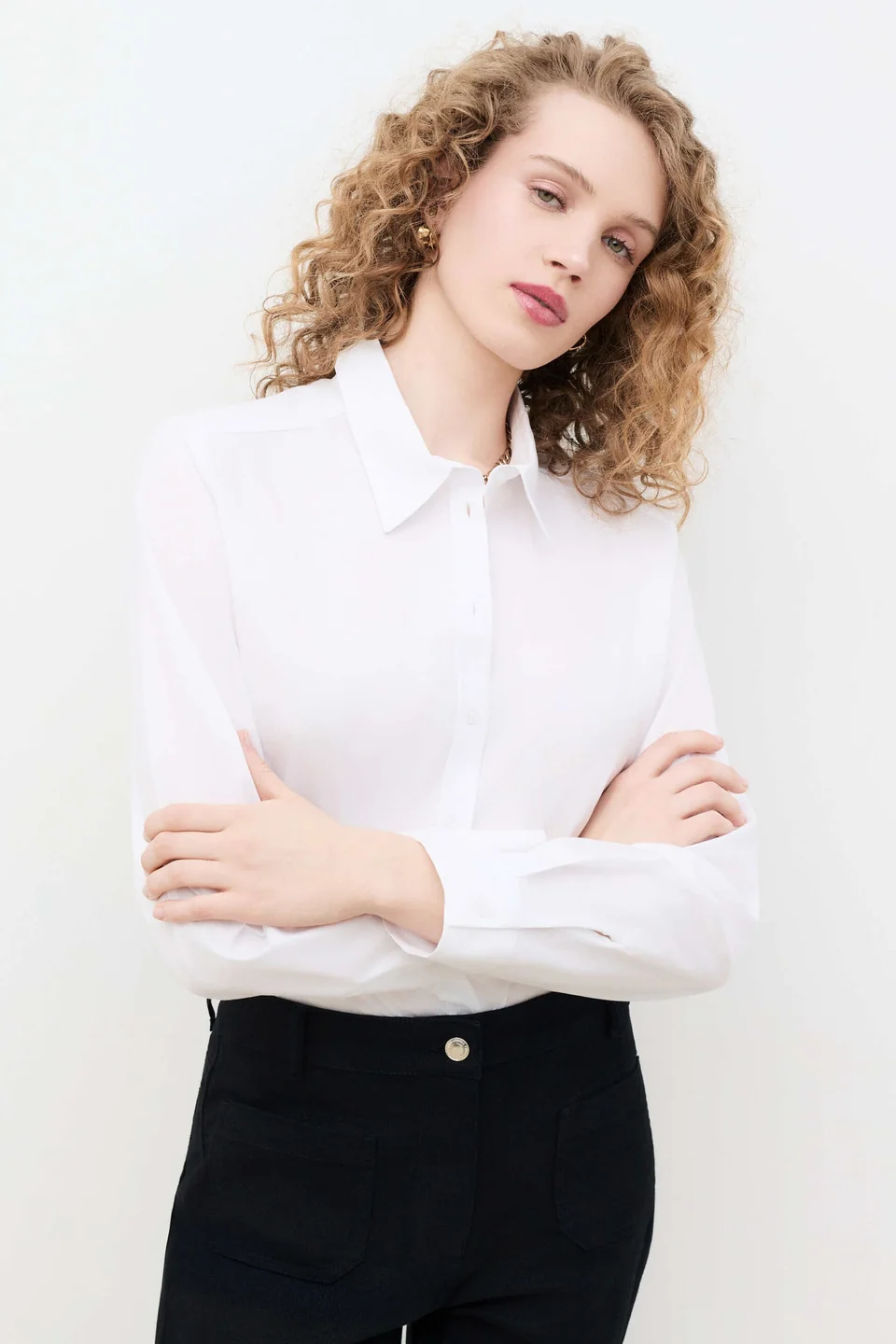
Button the shirt and sit, reach forward and raise your arms gently. The placket should feel comfortable without tension that bothers you across the chest or stomach. If it opens between buttons, compare another cut rather than assuming the printed size tells the whole story.
Choose your shoulder line
A shoulder seam may sit near the shoulder point or farther down in a deliberately relaxed cut. Judge the whole shape and whether your arms move easily. Check that the collar rests comfortably when buttoned to the height you prefer, especially under a jacket or fine knit.
Set the hem deliberately
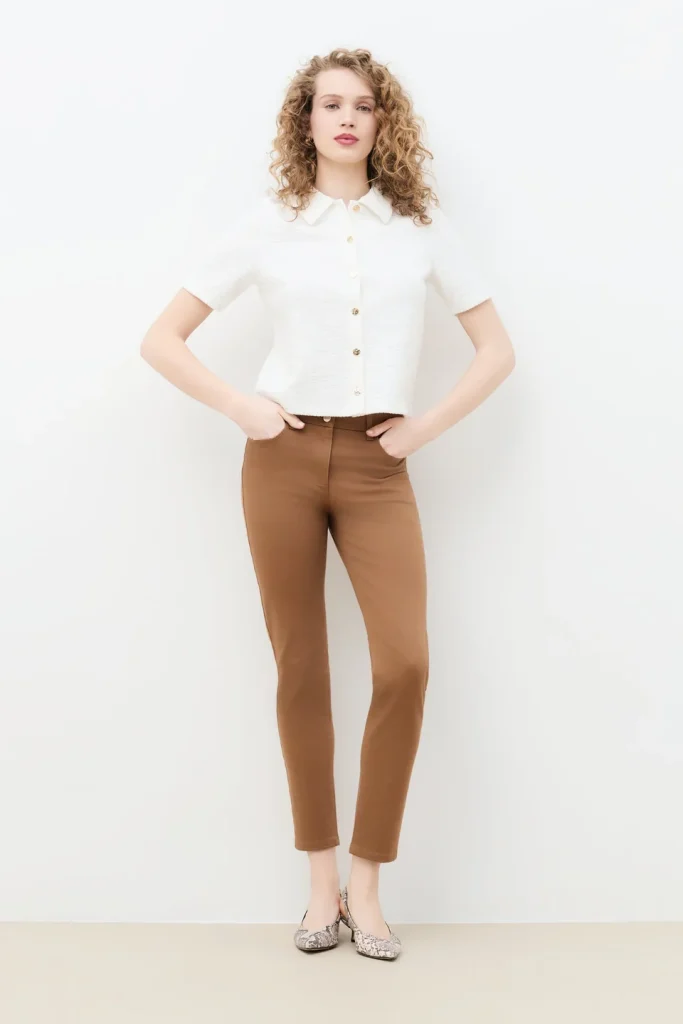
Compare the shirt loose, fully tucked and tucked only at the front. A long hem needs room inside a waistband, while a shorter shape may sit more easily over a skirt. Walk and sit after tucking so you can see whether the extra fabric gathers or pulls uncomfortably.
Leave space for a layer
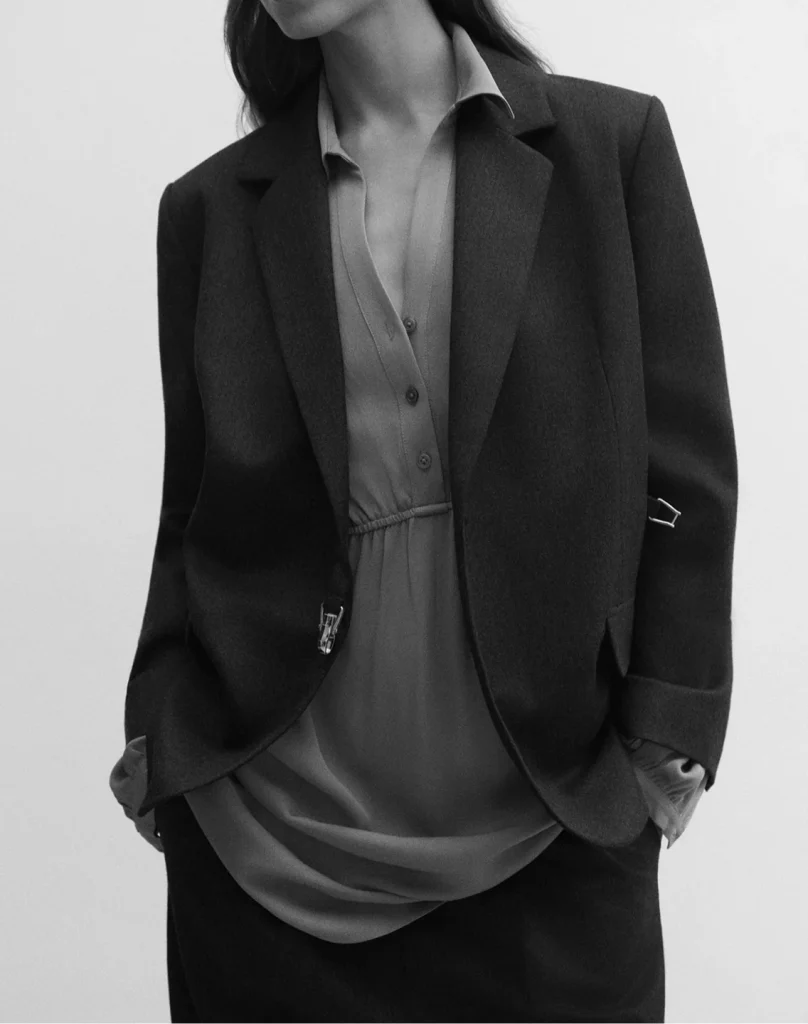
Put on the blazer or cardigan you use most often. Smooth the sleeves once, then bend your elbows and cross your arms. Bunched cuffs or restricted armholes can make a good shirt difficult to wear underneath; a different sleeve shape may solve the problem better than sizing up.
Care for the actual fabric
Read the composition and care label before washing, drying or pressing. Separate colours as instructed and treat a mark with a suitable method before applying heat. Check collar edges and cuffs regularly; careful drying and label-approved pressing can make the next wear easier.
← Back to the guides