Give the base enough room
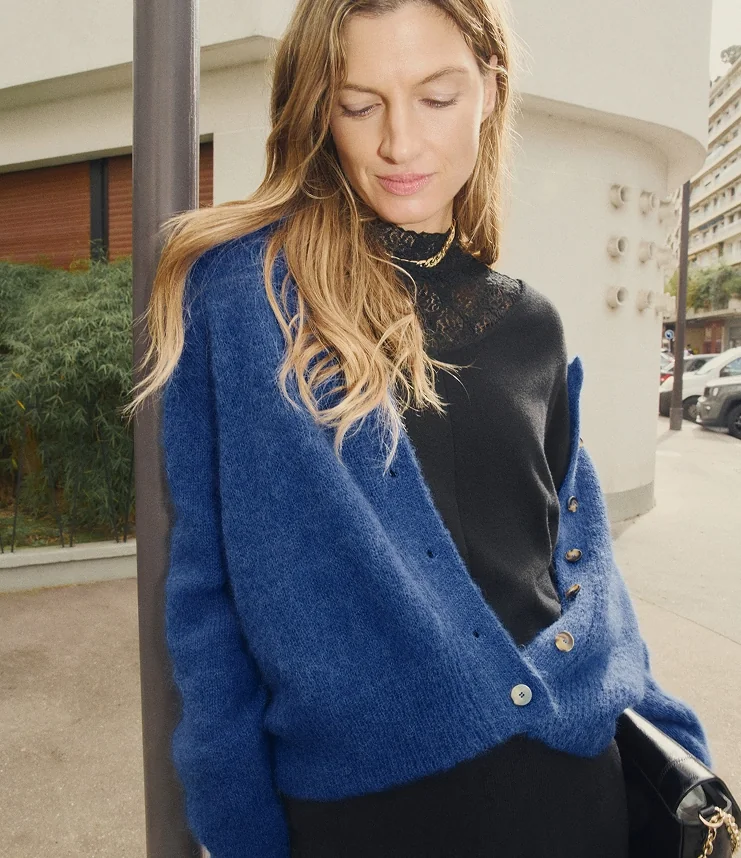
Try the cardigan over the top you plan to wear, including its sleeves and collar. Check the armholes while reaching forward and crossing your arms. A fine base often takes less space, but thickness and cut both matter; comfort in the complete combination is the useful test.
Decide how it will close
Fasten the buttons you intend to use and sit down. Look for pulling between buttons and feel whether the lower edge rides upward. Wearing a cardigan open changes its shape, but the back and upper sleeves still need room to move without pressure from the layer underneath.
Connect the necklines
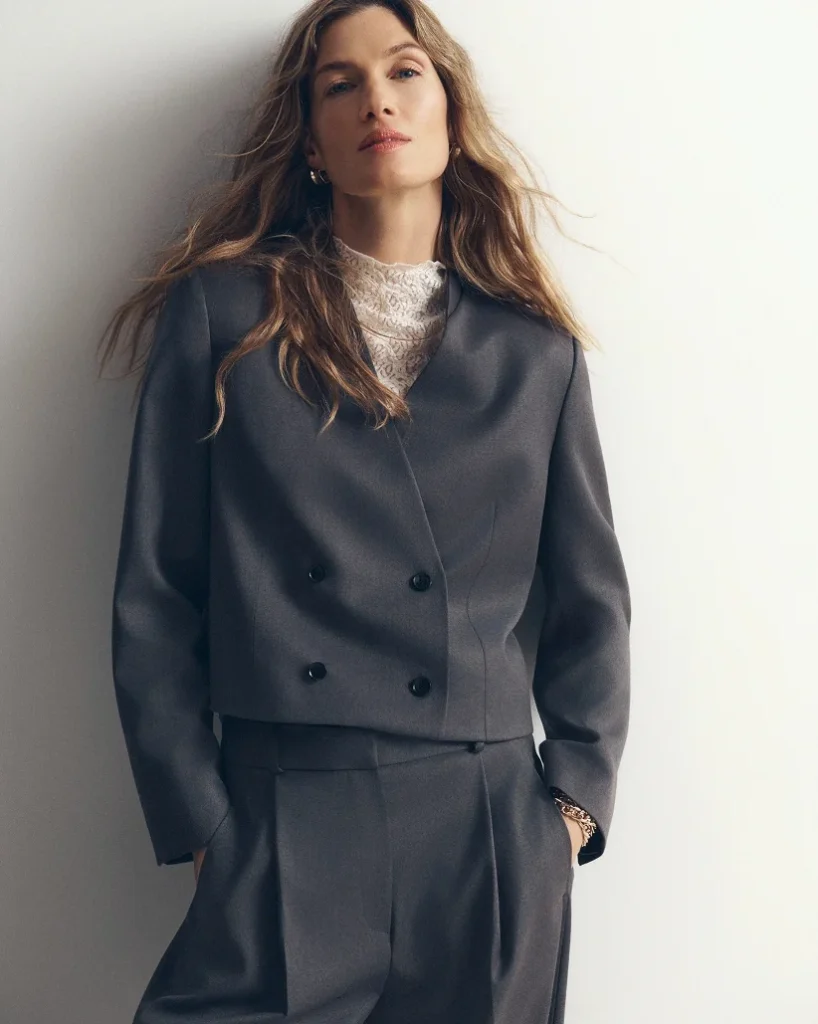
Compare the cardigan opening with your shirt collar or top neckline. A visible base layer can frame the face or add a line through the outfit. Adjust the collar once, then move normally; if it needs constant arranging, choose a neckline combination that settles more easily.
Compare the hem positions
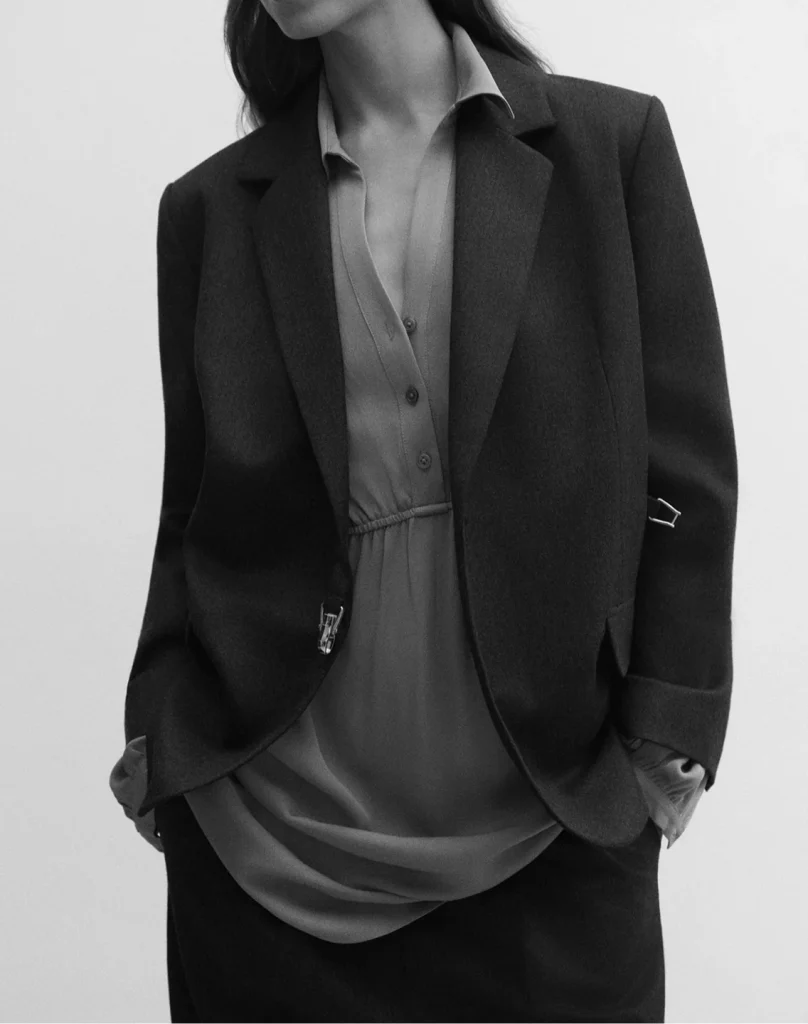
Let the cardigan and base layer fall naturally before trying a tuck. A long shirt can create an intentional lower edge, while a shorter base keeps the outline quieter. Check the side view with your trousers or skirt and decide which lengths make the outfit feel balanced to you.
Use cuffs and accessories lightly
Set the sleeves at a comfortable position and check that rolled cuffs do not tighten around the forearm. A belt changes where fabric gathers, so try sitting with it before leaving. Keep necklaces and bag hardware clear of loose stitches, especially around the button band and shoulder.
Give the knit a careful rest
After wearing, check the button thread and any areas rubbed by a bag. Follow the care label for cleaning and drying, and avoid hanging a heavy wet cardigan by its shoulders. Fold it when fully dry if that supports its shape better, with buttons lying flat rather than pressed into the knit.
← Back to the guides