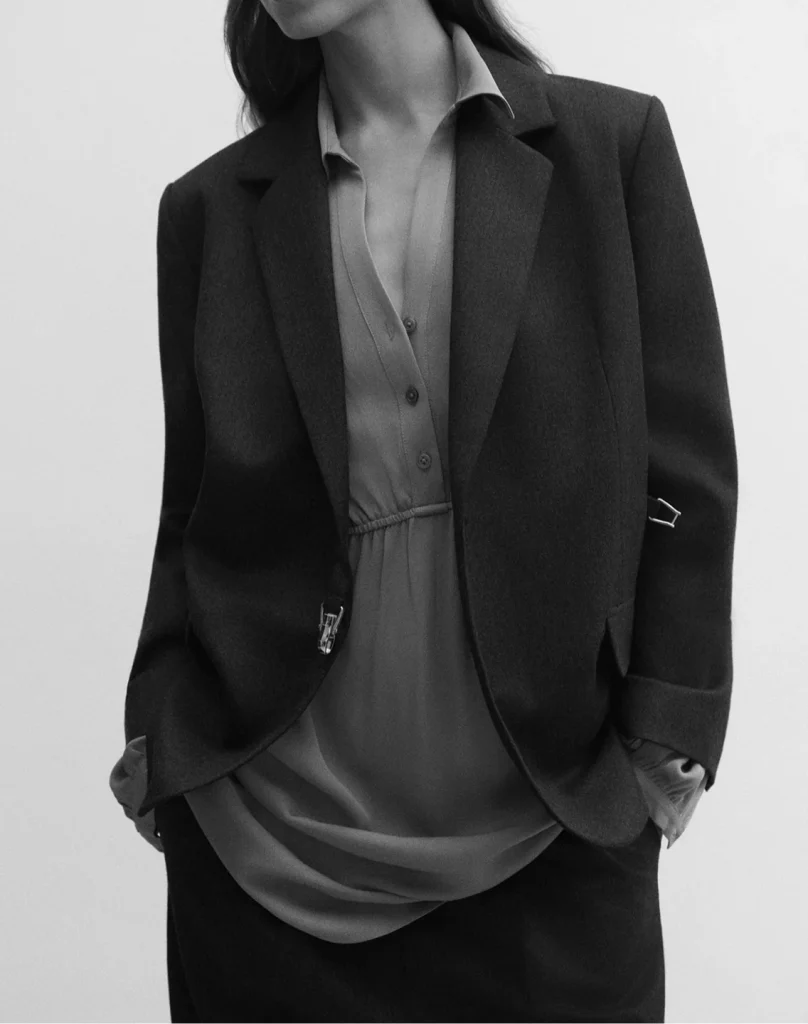

Begin with the day's settings
Think about where you will sit, walk and travel in the dress. Check its neckline and coverage in ordinary light with the underwear you plan to wear. A lining, slip or base layer changes the feel and space inside the garment, so try those pieces together before deciding.
Let the upper body move
Reach forward, raise your arms gently and sit down. Notice pressure across the chest, back and armholes, especially at a fitted waist seam. A dress can have a close outline and still allow comfortable movement; repeated pulling is a reason to compare another cut rather than endure it.
Check where the waist rests
If the dress has a defined waist, see where it settles after walking. Tie a belt comfortably without using it to force the garment into position. A gathered waist, a straight shape and a wrap fastening all distribute fabric differently, so judge each in the way you intend to wear it.
Walk the full hem
Take normal steps and try a stair if one is safely available. Check whether the skirt restricts your stride or catches on your legs. With a slit or wrap, sit and move in front of a mirror to assess the coverage you prefer; the standing length tells only part of the story.
Build the outer outline
Put on your cardigan or jacket and compare its hem with the dress. Check that a sleeve or shoulder detail has space under the layer. Add the shoes and bag you use in practice, then look at the whole outfit from the side to see where volume gathers or changes direction.
Plan care before the next wear
Read every care instruction, including those for lining, trims and removable belts. Use the permitted method for a small mark and avoid heat until it is addressed. Hang or fold the clean, dry dress as its construction allows, keeping delicate fastenings clear of fabrics they might catch.
← Back to the guides