Notice the surface and drape
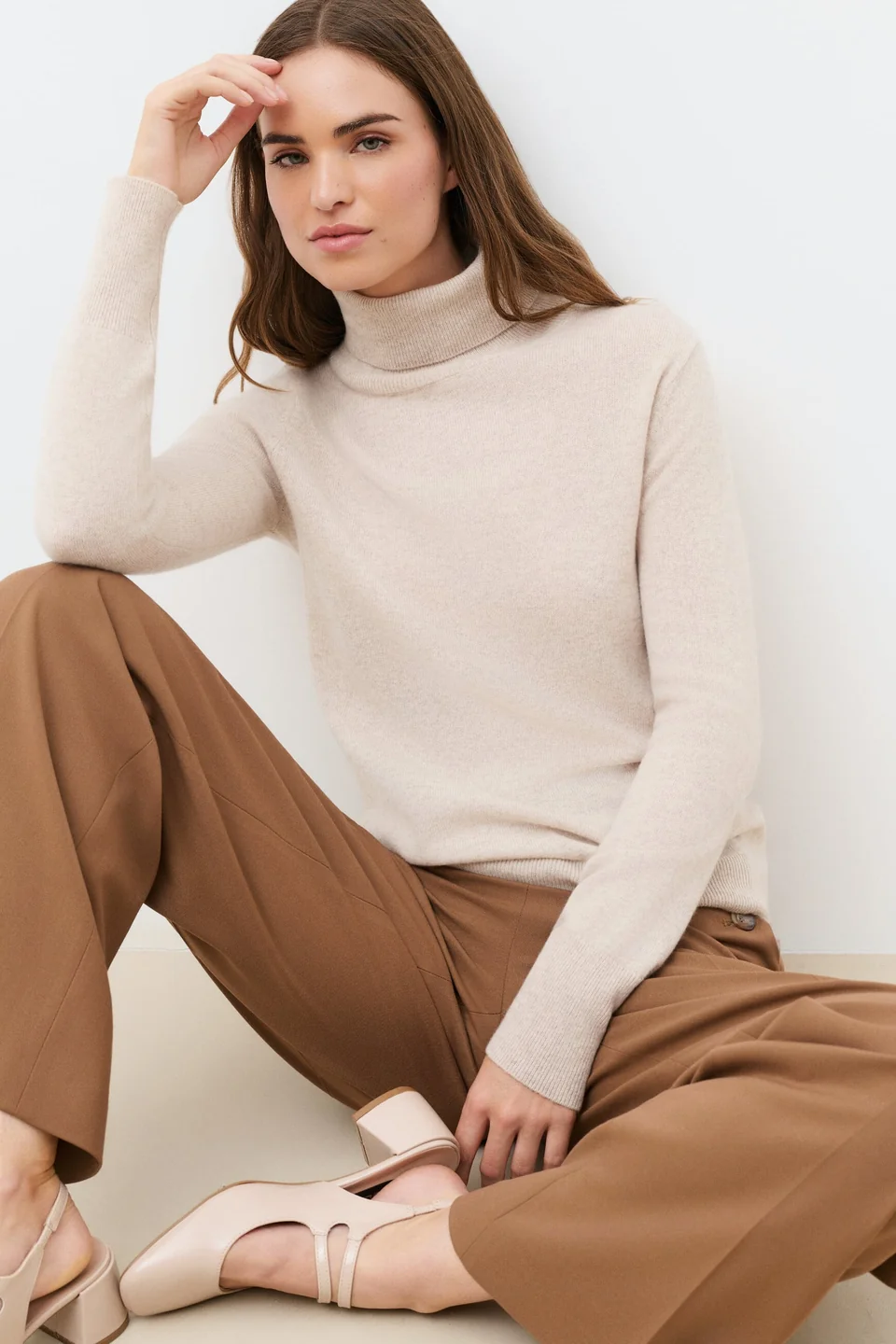
Hold the knit without stretching it and look at the fabric in ordinary light. Fine describes the appearance of the knit, not a guaranteed fibre or level of warmth. Read the composition label and consider how the fabric feels against your skin during the sort of day you plan to wear it.
Check ease at the moving points
Try the knit while sitting and reaching, paying attention to the upper arms, chest and waistband. Ribbing may follow the body while the main fabric falls more loosely. Choose enough room for comfort; pulling the hem down repeatedly can be a sign that the proportions are not working for you.
Choose a base that sits smoothly
If you prefer a layer underneath, try it before deciding on the fit. Check its neckline, seams and hem through the knit in daylight. A thicker base can change the sleeve and shoulder shape, so select the pair together rather than expecting every thin-looking garment to layer the same way.
Balance the lower edge
Compare the knit loose over trousers with a small tuck at the front. Notice whether the waistband rolls or the fabric forms a ridge at the hips. A shorter knit may sit neatly with a higher waist, while a longer hem can work well over a skirt when it falls without catching.
Check the next layer too
Put on the jacket or coat you intend to wear and move your arms. Look for friction at cuffs and around jewellery that could catch an open stitch. Keep rough bag straps in mind, and remove a snag gently using a suitable repair method instead of cutting a loop on the surface.
Dry and store by the label
Read the care instructions before choosing a wash cycle or drying position. Support the garment when wet if the label calls for it, and reshape gently without stretching the ribs. Store clean, fully dry knitwear folded when hanging would pull it out of shape, with room around the stack.
← Back to the guides