
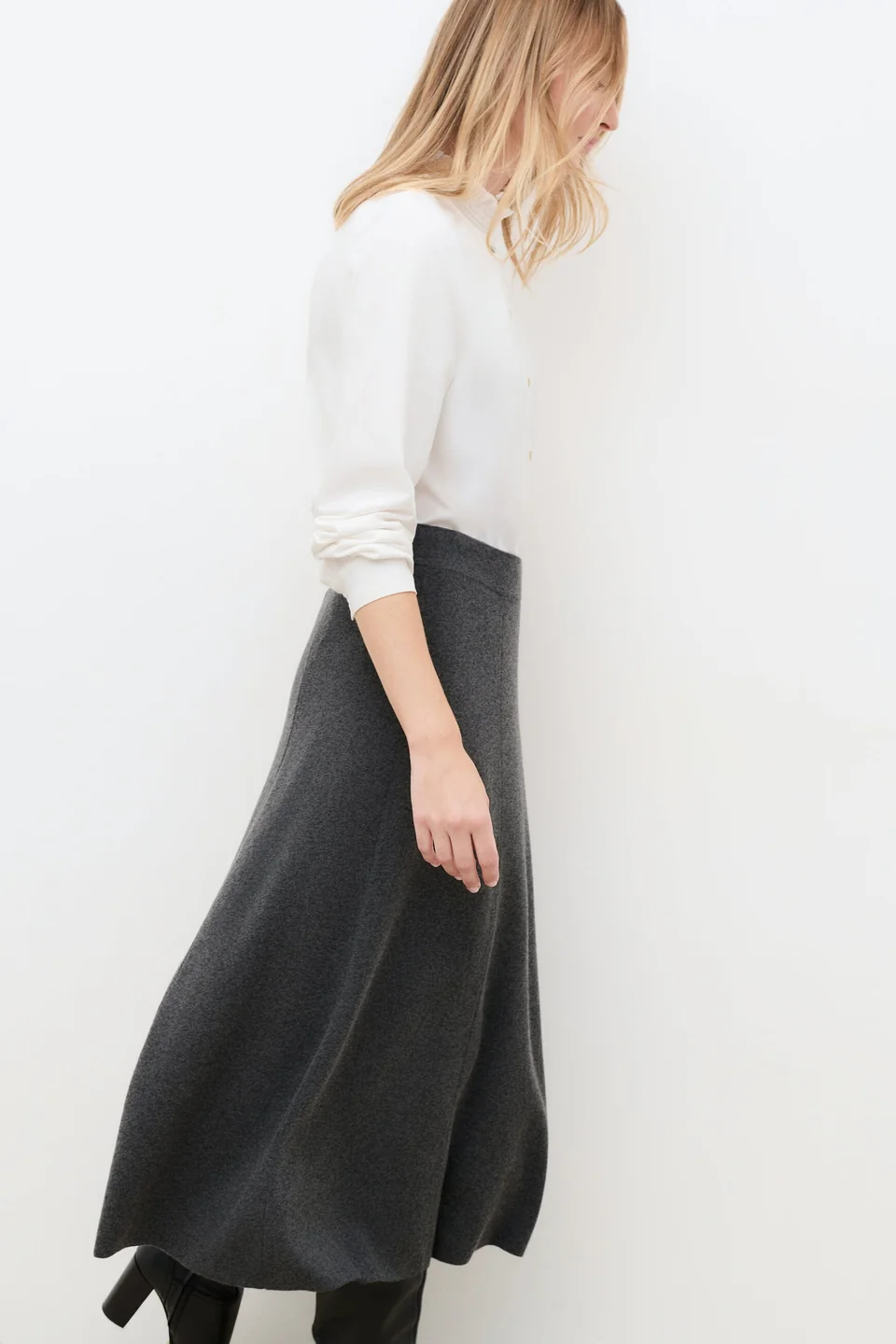
Choose the waist position first
Put the skirt at its intended waist height and sit down before judging its length. The waistband should feel comfortable as you breathe and bend. A skirt that slides up or turns while walking may need a different shape or an alteration rather than a tighter belt holding it in place.
Read how the fabric falls
Let the skirt settle without pulling the hem straight. Pleats, gathers and a bias cut can create very different lines at the hips. Check the side and back as well as the front; choose the amount of room and movement you enjoy instead of expecting every midi skirt to fall alike.
Make space for your stride
Walk at your usual pace, turn and try a safe step up. On a narrower skirt, check the opening or slit through that movement and while seated. If the hem limits an ordinary stride, compare another cut; stretching a seam or forcing a slit is not a comfortable everyday solution.
Try the actual footwear
Compare the skirt with your everyday flats, boots or other chosen shoes. Notice the space between the hem and the shoe, including when you sit. There is no universal correct gap; look for an outline you like and make sure the fabric does not catch on buckles, hooks or the heel.
Set the top's lower edge
Try a tucked top, a shorter knit and a loose shirt in turn. Each changes how much of the waistband remains visible and where volume begins. Sit after tucking and smooth the fabric once; if it keeps bunching, choose a lighter base or let a hem fall outside the waistband.
Preserve the intended structure
Check the care label before washing or pressing, particularly with pleats, a lining or shaped seams. Do not assume every crease should be ironed flat. Store the skirt clean and dry with its waistband supported or folded carefully, and inspect the hem if it has brushed against a rough surface.
← Back to the guides